
Viridien's Senegal Reimaging Program Points Explorers Toward New Deepwater Plays
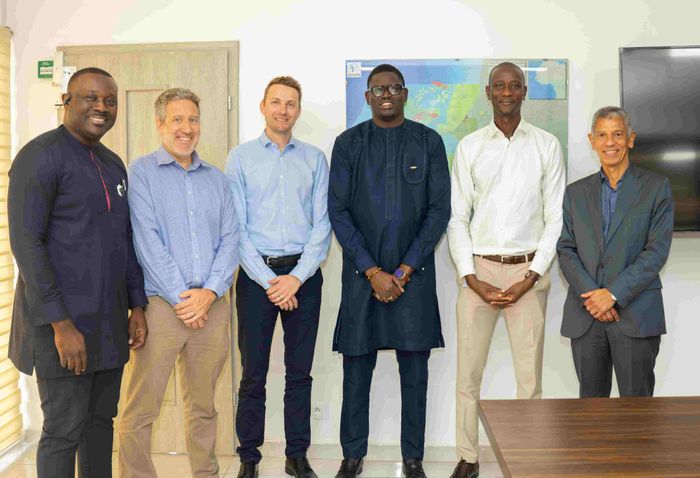
Senegal's offshore has led the MSGBC basin with a decade of major discoveries, and the country is using that momentum to invest in a sharper picture of the basin’s underexplored acreage. In August, Earth data and geoscience company Viridien signed a multi-client partnership with national oil company Petrosen covering Senegalese offshore blocks. Speaking with MSGBC Oil & Gas organizer Energy Capital & Power (ECP), Viridien's Sylvain Masclet, who leads the company's multi-client business across Sub-Saharan Africa, explained how modern seismic imaging could open the basin's deepwater to a new round of exploration.
“MSGBC's greatest opportunities lie ahead,” Masclet told ECP. “The basin has successfully transitioned from frontier exploration to proven production, and we believe there's a significant untapped potential for further growth.”
Under the agreement, Viridien will reimage Senegal's legacy seismic surveys with its latest imaging technology, and Masclet said the partners also see scope for new acquisition in deep water. The resulting datasets, paired with regional geological and prospectivity studies, will be licensed to operators and investors through Viridien's multi-client library.
Demand for the data has grown with production at the Sangomar oil field and the Greater Tortue Ahmeyim LNG project, as well as gas discoveries such as Yakaar-Teranga. “By reducing uncertainty and improving confidence in prospect evaluation, we help companies make better exploration decisions,” Masclet said.
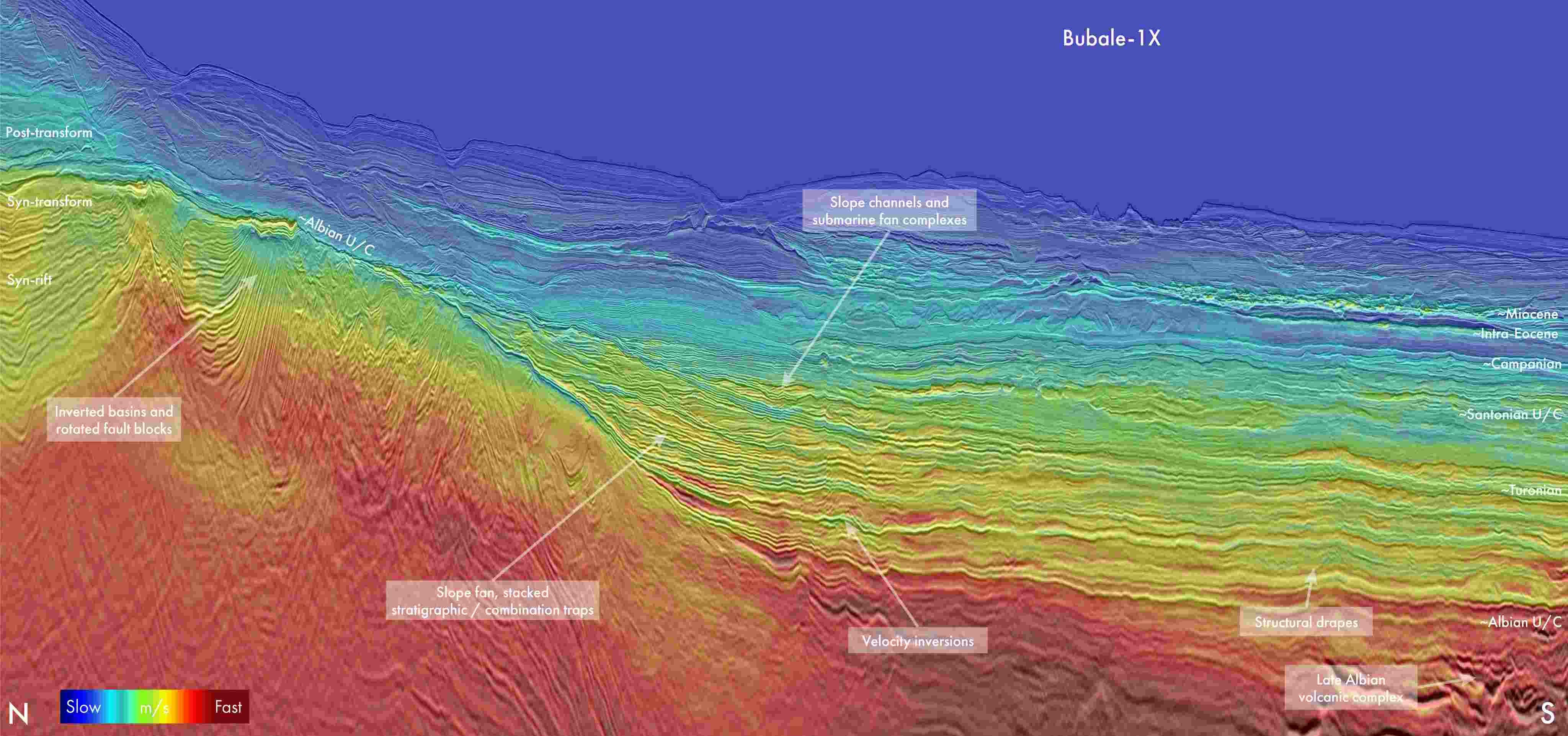
Masclet expects the largest gains in the basin's deepwater slope channels and basin floor fan systems. Both have seen less drilling than the basin's proven plays, and much of the existing seismic over them predates modern imaging.
Reimaging legacy data, Masclet explained, addresses two technical problems in those areas. Stratigraphic traps are difficult to identify on older data and require reliable amplitude versus offset analysis, while velocity variations around the carbonate shelf margins distort seismic images. Viridien corrects for the latter with full-waveform inversion (FWI), which models how seismic waves travel through rock to build higher-resolution and more accurate velocity models. The method requires large-scale computing, which Viridien runs on its own high-performance computing infrastructure.
 Viridien has applied the same approach in Ivory Coast, where it has spent four years reimaging the Tano Basin with time-lag FWI. The company links the program to rising industry interest in the basin following the Baleine and Murene South discoveries, and Masclet expects similar results across MSGBC. “The industry is shifting from acquiring more data to extracting more value from the data,” he noted.
Viridien hopes to take the Senegal model to the rest of the basin and is in discussions with governments in neighboring MSGBC countries. In Senegal, the partnership also includes training and technical collaboration with Petrosen, which Masclet described as supporting the development of a sustainable domestic energy sector.
Investors will have the opportunity to review Viridien’s newest data at MSGBC Oil, Gas & Power 2026. Masclet will speak on December 2 on a panel exploring where the basin's next oil and gas resources could be found.
Organized by Energy Capital & Power under the High Patronage of President Bassirou Diomaye Faye and in partnership with the Ministry of Energy and Petroleum, MSGBC Oil, Gas & Power 2026 takes place December 1–3 at the Centre International de Conférences Abdou Diouf in Dakar. For more information and registration, visit www.msgbcoilgasandpower.com.